Blog on Docks and Boat Lifts in SWFL – Boat Builder Fort Myers, FL | Cape Coral, FL

Used Pontoon Boat Lifts for Sale | Trusted by HONC

Affordable Lift Solutions Without Sacrificing Performance

Investing in a pre-owned lift system can be a smart financial move. However, not all secondhand equipment offers the same quality or durability. That’s why HONC carefully sources and inspects every unit before making it available.

Additionally, our team verifies capacity ratings, structural components, and mechanical systems to ensure each lift meets performance expectations. In contrast to private-party purchases, buying through an established marine contractor provides added peace of mind and professional support.

Why Choose a Pre-Owned Pontoon Lift?

  • Cost Savings: Enjoy significant savings compared to new systems, while still protecting your boat.
  • Inspected & Evaluated: Each lift is reviewed for structural strength and safe operation.
  • Capacity Guidance: We help match lift capacity to your pontoon’s size and weight.
  • Installation Support: Professional installation ensures proper setup and long-term performance.
  • Local Expertise: HONC understands regional water conditions, shoreline requirements, and permitting considerations.

Furthermore, our knowledgeable staff will explain the differences between beam width, bunk style, and drive mechanisms, so you can make an informed decision.

Available Boat Lift Options

While inventory changes frequently, used models may include:

  • Aluminum cradle lifts
  • Vertical lifts
  • Hydraulic lift systems
  • Manual and electric drive configurations

Because availability can shift quickly, we encourage customers to contact us for the latest updates. Meanwhile, our team can also notify you when suitable equipment becomes available.

Protecting Your Pontoon Investment

A properly selected lift not only improves convenience but also reduces hull fouling, corrosion, and storm-related damage. According to the National Marine Manufacturers Association (NMMA), lifting your boat out of the water significantly extends its lifespan and reduces maintenance costs. Learn more about boating best practices at the NMMA website: https://www.nmma.org

Therefore, choosing the right lift—new or pre-owned—directly impacts long-term ownership costs and vessel condition.

Our Simple Buying Process

  1. Consultation: We review your pontoon’s specifications and waterfront setup.
  2. Recommendation: Our team suggests appropriate available models.
  3. Inspection Review: We explain condition details and any refurbishment performed.
  4. Installation & Setup: Professional placement ensures safe and stable operation.
  5. Ongoing Support: HONC remains available for maintenance or upgrades.

As a result, you receive more than equipment—you gain a marine partner committed to long-term performance.

FAQ

Are used lift systems reliable?

Yes—when properly inspected. HONC evaluates structural components, cables, and drive systems before resale.

Can I finance a pre-owned lift?

Financing options may be available depending on inventory and lender partnerships. Contact us for details.

Will the lift fit my existing dock?

In many cases, yes. However, site conditions and dock configuration must be reviewed to confirm compatibility.

How often should a lift be serviced?

Routine inspections are recommended annually. Additionally, moving parts should be checked periodically to maintain safe operation.

Find the Right Lift Today

If you’re comparing used pontoon boat lifts for sale, partner with a team that understands performance, safety, and shoreline conditions. Ultimately, working with HONC ensures you receive guidance that protects both your boat and your budget.
How to Move Boat Lift Safely and Efficiently

If you’re wondering how to move boat lift equipment safely, you’re not alone. Seasonal water changes, dock adjustments, and shoreline improvements often require repositioning your lift. However, moving this type of equipment involves more than simply dragging it across the lakebed. Proper planning, the right tools, and attention to safety are essential.

At HONC, we regularly help waterfront property owners relocate and adjust their marine systems. Therefore, we understand the structural, mechanical, and environmental considerations involved. Below, you’ll find practical guidance to help you determine whether this is a DIY project or one best handled by professionals.

Understanding Your Lift Type

Identify Your Boat Lift System First

Before deciding how to move boat lift equipment, you must identify the type of lift you have. Different systems require different approaches.

Common Lift Types:

  • Vertical boat lifts
  • Cantilever lifts
  • Hydraulic lifts
  • Floating lifts
  • Piling-mounted lifts

For example, vertical lifts typically require partial disassembly, while floating lifts may only need repositioning and anchoring adjustments. In contrast, hydraulic or piling-mounted systems often demand specialized equipment and professional handling.

Safety Considerations

Prioritize Safety Before Moving

Moving a lift involves heavy components, shifting water levels, and underwater hazards. As a result, safety should always come first.

Important Safety Steps:

  • Disconnect power sources completely
  • Remove the boat and any added weight
  • Inspect cables, pulleys, and hardware
  • Wear protective gloves and non-slip footwear
  • Never attempt movement alone

Additionally, check local marine regulations before repositioning equipment. Some waterfront areas require permits for structural relocation. You can review general boating safety recommendations at the U.S. Coast Guard’s boating safety resource:
https://www.uscgboating.org

Best Time to Move a Lift

Choose the Right Season

Timing significantly affects how to move boat lift systems efficiently. Typically, the best time is during lower water levels or before peak boating season. Meanwhile, attempting to relocate during high tides, storms, or active boating periods increases risk.

In many regions, early spring or late fall provides ideal conditions. Water is calmer, traffic is lighter, and temperatures are manageable. Consequently, you’ll reduce both safety hazards and scheduling conflicts.

Step-by-Step: Relocating a Freestanding Lift

If you have a freestanding or bottom-standing system, follow these general steps:

Step 1: Remove the Boat

Completely unload the lift to eliminate unnecessary strain.

Step 2: Disconnect Electrical Components

Shut off and detach all power sources. Moreover, secure wiring away from water exposure.

Step 3: Lift and Stabilize the Frame

Using lift wheels or a mechanical assist device, elevate the frame slightly above the lakebed.

Step 4: Reposition Gradually

Move the lift slowly to the new location. Avoid dragging, as this can bend structural supports.

Step 5: Re-Level and Test

Once positioned, ensure the frame is level. Then reconnect power and test lifting functions before loading your vessel.

Although these steps outline how to move boat lift equipment in general terms, larger systems often require cranes or marine-grade dollies. Therefore, assess your lift size carefully before proceeding.

When to Call Professionals

While some property owners manage small relocations independently, certain scenarios demand expert assistance.

Call a Professional If:

  • The lift exceeds 6,000 lb capacity
  • It is piling-mounted or permanently installed
  • Electrical rewiring is required
  • The shoreline has uneven or soft sediment
  • You lack specialized equipment

At HONC, our team uses marine-rated machinery and proven techniques to relocate lifts without damaging docks or surrounding structures. Furthermore, professional service helps prevent costly cable failures and misalignment issues later.

Common Mistakes to Avoid

Many waterfront owners underestimate how to move boat lift systems correctly. However, small mistakes can lead to expensive repairs.

Avoid These Errors:

  • Dragging the frame across rocky bottoms
  • Forgetting to re-tension cables
  • Ignoring weight distribution
  • Failing to level the structure
  • Skipping a post-move inspection

Ultimately, attention to detail protects both your boat and lift investment.

Environmental Considerations

Repositioning marine equipment can disturb sediment and shoreline habitats. Therefore, minimize impact by choosing stable footing and avoiding sensitive vegetation areas. Additionally, consider consulting local environmental guidelines before relocating structures in protected waterways.

Responsible movement not only preserves your property value but also protects the ecosystem that makes waterfront living enjoyable.

FAQ

Can I move a boat lift without removing it from the water?

In many cases, yes. However, shallow water and proper equipment are necessary to prevent structural damage.

How many people does it take to move a lift?

Smaller units may require 2–3 people, while larger systems often require mechanical assistance.

Do I need a permit to relocate my lift?

Regulations vary by state and municipality. Therefore, check with local marine authorities before moving permanent systems.

How often should I reposition my lift?

Typically, repositioning is seasonal or water-level dependent rather than routine.

Learning how to move boat lift systems properly can save time and prevent costly mistakes. However, every waterfront property presents unique challenges. As a result, professional guidance often ensures safer outcomes and longer equipment lifespan. If you’re unsure about handling the relocation yourself, HONC is ready to help with dependable service and marine expertise you can trust.

Boat Lifts in Cape Coral, Florida | HONC Dock & Lift Solutions

If you own waterfront property, investing in boat lifts Cape Coral Florida is one of the smartest decisions you can make. Because Cape Coral features over 400 miles of canals, protecting your vessel from saltwater exposure and tidal fluctuations is essential. As a result, a properly installed lift not only preserves your boat’s condition but also extends its lifespan.

At HONC, we specialize in custom-engineered lifting systems designed specifically for Southwest Florida’s marine environment. Moreover, our team understands local permitting requirements, soil conditions, and waterfront layouts, ensuring every project meets the highest standards of safety and durability.

Why Boat Owners in Cape Coral Choose Lift Systems

Protection From Saltwater Damage

Saltwater is highly corrosive. Therefore, keeping your boat elevated above the water significantly reduces hull deterioration, barnacle growth, and algae buildup. In contrast to mooring your vessel in the water full-time, lifting it between uses can dramatically lower long-term maintenance costs.

Storm and Surge Readiness

Florida weather can shift quickly. Consequently, having a properly rated lift system adds an extra layer of protection during heavy rain and seasonal storms. When installed at the correct height, it helps minimize potential damage from fluctuating water levels.

For additional guidance on hurricane preparedness, visit the National Hurricane Center: https://www.nhc.noaa.gov/

Convenience and Accessibility

Additionally, lift systems provide unmatched convenience. With the push of a button, your boat is lowered and ready to go. Meanwhile, when you return, you can safely raise it out of the water within minutes. Ultimately, this ease of use encourages more frequent outings without the hassle of marina scheduling.

Types of Lift Systems Available

Four-Post Cradle Lifts

Four-post systems are among the most popular options for residential docks. Because they offer stable vertical lifting, they are ideal for a wide range of boat sizes commonly found throughout Cape Coral canals.

Elevator Lifts

For narrow waterways or properties with space limitations, elevator-style systems provide a compact solution. However, proper structural integration with your seawall or dock is critical, which is why professional installation matters.

PWC and Specialty Lifts

In addition to full-size vessels, we also install solutions for personal watercraft and smaller boats. As a result, homeowners can protect every watercraft at their property with a cohesive system design.

Why Work With HONC?

Choosing the right contractor is just as important as selecting the right equipment. At HONC, our team combines engineering expertise with local knowledge. Furthermore, we use marine-grade materials specifically designed to withstand Florida’s harsh sun, salt exposure, and humidity.

Because permitting regulations vary throughout Lee County, we guide you through every step of the process. Meanwhile, our installation crews follow strict quality standards to ensure long-term reliability and performance.

Key Benefits:

  • Custom sizing and weight capacity planning
  • Professional permitting assistance
  • Durable, corrosion-resistant components
  • Expert installation and testing
  • Ongoing service and maintenance support

Long-Term Value for Waterfront Homes

Installing a lift system does more than protect your vessel. In addition, it enhances property appeal and functionality. Prospective buyers often view waterfront upgrades as premium features, especially when they are professionally installed and properly permitted.

Therefore, investing in a high-quality system today can contribute to both immediate protection and long-term resale value.

FAQ

How much weight can a residential lift system handle?

Weight capacity varies based on design and configuration. However, systems can be engineered to accommodate everything from small fishing boats to larger offshore vessels.

Do I need a permit in Cape Coral?

Yes, most waterfront lift installations require permitting. Fortunately, HONC manages the process to ensure compliance with local regulations.

How often should lift systems be serviced?

Routine inspections are recommended at least annually. Additionally, periodic cable and motor checks help ensure optimal performance.

Boat Dock Canopy Solutions for Commercial Waterfronts | HONC

For commercial waterfront properties, protection and presentation go hand in hand. A well-built overhead dock structure shields boats from harsh UV exposure, heavy rain, and debris. As a result, vessel maintenance costs decrease while customer satisfaction improves. Additionally, properly engineered shade systems contribute to a more professional, polished marina environment that attracts long-term tenants and repeat visitors.

Why Commercial Waterfront Facilities Need Reliable Coverage

Florida’s coastal climate is beautiful yet demanding. Intense sun, high humidity, and seasonal storms can quickly degrade unprotected vessels and dock infrastructure. Therefore, installing a heavy-duty canopy system helps reduce sun damage, interior fading, and premature wear. Meanwhile, shaded docking areas create a more comfortable experience for boat owners and guests alike. According to the National Oceanic and Atmospheric Administration (NOAA), prolonged UV exposure significantly accelerates material deterioration in marine environments (https://www.noaa.gov). Consequently, proactive protection is essential for commercial operators.

Custom Styles to Complement Your Marina

Every commercial property has unique structural and aesthetic needs. For example, waterfront resorts may prioritize architectural appeal, while working marinas may focus on durability and slip coverage efficiency. In contrast, yacht clubs often seek a balance of performance and appearance. We offer multiple roof profiles, color options, and structural configurations to ensure your dock covering integrates seamlessly with existing infrastructure.

Our Commercial Installation Process

Consultation & Site Evaluation

We begin with a comprehensive on-site assessment to evaluate dock conditions, slip layout, and environmental exposure.

Engineering & Permitting

Next, our team develops engineered drawings and manages permitting requirements to ensure compliance.

Fabrication & Installation

Finally, we fabricate your system and complete installation efficiently, keeping your marina operations running smoothly.

Investing in a professionally installed overhead dock system delivers measurable long-term returns. Not only does it extend the lifespan of vessels and dock components, but it also enhances property value and tenant retention. Additionally, shaded docking areas can serve as a competitive differentiator in crowded coastal markets. Ultimately, proactive infrastructure improvements strengthen both operational efficiency and brand reputation.

Why Partner with HONC for Your Waterfront Project

HONC brings decades of construction expertise to commercial waterfront development. Because we understand Florida’s climate challenges, we design structures that withstand high winds, salt exposure, and heavy rainfall. Furthermore, our integrated approach allows property managers to coordinate dock coverage with other construction or marine upgrades. As a result, projects stay on schedule and align with broader facility goals.

FAQ

Are these canopy systems engineered for hurricane conditions?

Yes. Each structure is designed to meet applicable Florida building codes and wind load standards for commercial applications.

Can multi-slip marinas install coverage in phases?

Absolutely. We can develop phased installation plans to minimize operational disruption.

What materials are best for saltwater environments?

Marine-grade aluminum framing and corrosion-resistant fasteners are typically recommended for long-term durability.

Protect Your Commercial Dock Investment

Whether you manage a marina, resort, or waterfront facility, HONC delivers dependable shade and structural solutions. Therefore, now is the time to upgrade your dock infrastructure with a professionally engineered system built to last.

Boat Dock Pics: Design Ideas, Materials & Waterfront Inspiration

When reviewing boat dock pics, it’s important to look beyond appearance alone. While style certainly matters, durability, layout, and long-term performance are equally critical. For example, dock orientation can improve boat access, while material selection directly impacts maintenance needs. Therefore, evaluating both aesthetics and engineering ensures your investment performs as beautifully as it looks.

At HONC, we design docks that balance visual appeal with structural integrity. Moreover, our team understands the environmental factors unique to Florida waterways, including fluctuating water levels, UV exposure, and saltwater corrosion. As a result, every dock is built with longevity in mind.

What to Look for in Dock Design Inspiration

Browsing dock galleries can spark ideas; however, knowing what to focus on makes the process more productive. Start by examining layout configurations. Straight docks offer simplicity and cost efficiency, whereas L-shaped or U-shaped layouts provide additional mooring space. Meanwhile, platform docks create ideal areas for seating or launching watercraft.

Additionally, pay attention to decking materials. Aluminum systems deliver low maintenance and superior resistance to corrosion. In contrast, traditional wood may offer a classic aesthetic but requires ongoing sealing and upkeep. Ultimately, selecting the right structure depends on how you use your waterfront.

For boating safety and standards, you can reference guidance from trusted resources like the National Marine Manufacturers Association at https://www.nmma.org, which outlines industry best practices.

  • Integrated boat lifts for convenient storage
  • Non-slip decking for enhanced safety
  • Built-in seating or swim ladders
  • Lighting systems for evening visibility
  • Covered sections for shade and protection
  • Kayak launches or jet ski platforms

Many boat dock pics showcase more than just the dock itself. In fact, additional features often elevate functionality. For instance, integrated lifts protect vessels from prolonged water exposure, thereby reducing hull maintenance. Similarly, LED lighting improves nighttime navigation while adding ambiance to your shoreline.

Furthermore, incorporating accessories during the design phase is typically more efficient than retrofitting later. Consequently, planning ahead helps streamline installation and maximize value.

Dock Materials That Stand the Test of Time

Material selection significantly influences performance. Aluminum dock systems are lightweight yet exceptionally strong. Therefore, they resist rust, warping, and insect damage common in wood structures. Additionally, modular aluminum components allow for easier future expansion.

Pressure-treated lumber, on the other hand, may present a lower upfront cost. However, it often requires regular staining and board replacement. Meanwhile, composite decking offers an appealing middle ground with enhanced durability and minimal maintenance.

At HONC, we help homeowners evaluate these options carefully. As a result, clients receive solutions tailored to their shoreline conditions and lifestyle goals.

Planning Your Own Waterfront Upgrade

After reviewing boat dock pics for inspiration, the next step is developing a clear plan. First, assess shoreline depth and water fluctuation patterns. Next, consider vessel size and frequency of use. Additionally, local permitting requirements may influence dock dimensions and placement.

Working with experienced professionals ensures compliance and structural reliability. Moreover, expert installation reduces long-term maintenance concerns. Ultimately, a well-designed dock becomes a seamless extension of your outdoor living space.

Your dock isn’t just a structure—it’s the gateway to your time on the water. Thoughtful design makes every launch and sunset more enjoyable.

HONC Team

Ready to Create Your Ideal Dock?

If browsing design ideas has inspired you, let’s turn that vision into reality. HONC specializes in durable, professionally engineered dock systems built for Florida’s waterfront conditions.

FAQ

How long does a new dock installation take?

Timelines vary depending on size and permitting; however, most residential projects are completed within several weeks after approval.

Are aluminum docks better than wood?

Aluminum systems typically require less maintenance and resist corrosion more effectively. Therefore, they are often preferred for long-term durability.

Can I customize my dock layout?

Absolutely. Layouts can include lifts, seating platforms, and specialized watercraft access points to match your needs.

Waterfront Marine Construction | HONC

Waterfront development requires more than traditional building expertise. Instead, it demands specialized knowledge of tides, soil conditions, permitting, and environmental protection. Therefore, HONC approaches every project with a comprehensive strategy that prioritizes structural strength and shoreline preservation.

Whether constructing heavy-duty docks or reinforcing bulkheads, our crews understand how to build below and above the waterline. Additionally, we collaborate with engineers, developers, and government agencies to ensure smooth execution from concept to completion.

Comprehensive Waterfront Infrastructure Solutions

Commercial Docks and Piers

We design and build high-capacity docking systems engineered to support significant loads and constant traffic. In addition, our structures are tailored to vessel type, water depth, and operational demands.

Seawalls and Bulkheads

Shoreline stabilization is essential for protecting upland assets. As a result, our team installs reinforced seawalls and bulkheads that mitigate erosion while enhancing long-term property value.

Marina Development

From layout planning to final installation, we construct full-service marinas that prioritize accessibility, durability, and code compliance.

Pile Driving and Foundations

Strong foundations are critical in any marine construction project. Therefore, we use advanced pile-driving equipment to ensure deep, stable support systems that withstand dynamic loads and wave action.

Engineered for Harsh Marine Environments

Saltwater, storms, and constant exposure create unique structural challenges. However, our team carefully selects materials designed to resist corrosion and deterioration. For example, we utilize treated timber, reinforced concrete, composite materials, and marine-grade hardware to extend service life.

Meanwhile, our project managers monitor environmental factors such as tidal shifts and sediment movement to ensure optimal installation timing. Consequently, clients receive infrastructure that remains reliable year after year.

Regulatory Compliance and Environmental Responsibility

Permitting and compliance are integral to successful waterfront development. Therefore, HONC works closely with environmental consultants and regulatory agencies to meet federal, state, and local guidelines. We adhere to standards established by organizations such as the U.S. Army Corps of Engineers (https://www.usace.army.mil/) to ensure responsible shoreline development.

Furthermore, we implement best practices that minimize habitat disruption and sediment displacement. By maintaining strict compliance protocols, we reduce delays and protect surrounding ecosystems.

Why Experience Matters: Marine environments are unpredictable. Consequently, hiring an experienced contractor significantly reduces risk, prevents costly repairs, and ensures structural longevity.

Our Proven Process

  1. Initial Consultation: We evaluate site conditions, project scope, and operational goals.
  2. Engineering & Design Coordination: Next, we collaborate with engineers to finalize structural specifications.
  3. Permitting & Compliance: Meanwhile, our team manages regulatory documentation and approvals.
  4. Construction & Installation: Using specialized marine equipment, we execute each phase with precision.
  5. Final Inspection & Quality Assurance: Ultimately, we verify performance standards before project completion.

Safety-First Project Execution

Safety is foundational to every marine construction initiative we undertake. Accordingly, our crews are trained in marine-specific OSHA protocols and heavy-equipment operation. Additionally, we conduct routine safety briefings and enforce strict on-site standards to protect workers, clients, and surrounding waterways.

Because waterfront construction involves variable conditions, proactive safety planning ensures uninterrupted progress and reliable outcomes.

Waterfront infrastructure must be engineered to endure both time and tide. At HONC, we build with that responsibility in mind.

Applications Across Commercial Industries

Our expertise supports a wide range of commercial sectors. For instance, we partner with:

  • Marina developers
  • Municipal waterfront planners
  • Industrial port facilities
  • Hospitality and resort properties
  • Private commercial waterfront owners

In contrast to general contractors, our specialization allows us to anticipate marine-specific challenges before they become costly setbacks.

Long-Term Value and Structural Integrity

Investing in professional marine construction protects your waterfront assets for decades. Although upfront planning may require detailed engineering and permitting, the long-term payoff includes reduced maintenance costs and enhanced operational reliability.

Moreover, properly installed foundations and shoreline reinforcements significantly decrease the risk of structural failure during severe weather events. As a result, commercial property owners gain peace of mind and measurable return on investment.

FAQ

How long does a commercial waterfront project take?

Timelines vary depending on scope, permitting requirements, and environmental conditions. However, most projects follow a clearly defined schedule once approvals are secured.

Do you handle permitting?

Yes. We coordinate with regulatory authorities to streamline approvals and maintain compliance.

What materials are best for saltwater conditions?

Marine-grade concrete, treated timber, composites, and corrosion-resistant hardware are commonly used for longevity.

Partner with HONC for Your Next Waterfront Project

Choosing the right contractor directly impacts performance, safety, and long-term durability. Therefore, HONC delivers strategic planning, expert craftsmanship, and dependable execution across every phase of development. From initial site evaluation to final inspection, we remain committed to quality and accountability.

If you are planning a commercial waterfront initiative, now is the time to partner with a team that understands the complexities of marine environments. Contact HONC today to discuss how we can bring your project to life with precision and confidence.

Boat Dock Images for Design Inspiration and Planning | HONC

Looking through boat dock images can reveal far more than just aesthetics. In fact, high-quality visuals showcase layout efficiency, material performance, and shoreline compatibility. Additionally, reviewing completed projects helps you determine what works best for your waterfront—whether that’s a narrow canal, open lake, or tidal shoreline. At HONC, we design docks that balance durability with visual appeal, so your investment enhances both access and property value.

Dock Styles You’ll See in Photo Galleries

From traditional wood platforms to modern aluminum systems, dock galleries often highlight a variety of structural styles. For example, some images showcase fixed docks anchored securely into the seabed, while others feature floating systems that adapt to water level changes. Meanwhile, lift-integrated layouts demonstrate how boat protection can blend seamlessly into the design. As a result, reviewing diverse examples allows you to compare functionality before committing to a final plan.

Common Dock Styles in Visual Galleries:

  • Fixed pile-supported docks
  • Floating docks with modular sections
  • Aluminum frame systems
  • Wood deck surfaces with composite upgrades
  • Docks with integrated boat lifts
  • Covered slips and canopy structures

Materials and Finishes That Stand Out

Beyond layout, boat dock images often highlight differences in materials and finishes. Pressure-treated lumber remains a classic option; however, aluminum framing offers enhanced longevity with minimal maintenance. Composite decking, in contrast, provides a clean look while resisting moisture damage. Therefore, comparing material performance visually can help you understand long-term value, not just appearance.

For additional guidance on marine-grade materials, you can review recommendations from the American Boat and Yacht Council (ABYC), which outlines safety and durability standards for waterfront structures.

Design Features That Improve Functionality

While style matters, functionality should always lead the design. Consequently, many photo examples highlight features that enhance everyday use. Built-in benches, ladder access points, lighting systems, and protective bumpers all contribute to a safer docking experience. Moreover, lift systems integrated directly into the platform help protect vessels from prolonged water exposure.

By reviewing real installations from HONC, homeowners can better understand how thoughtful engineering supports both convenience and long-term reliability.

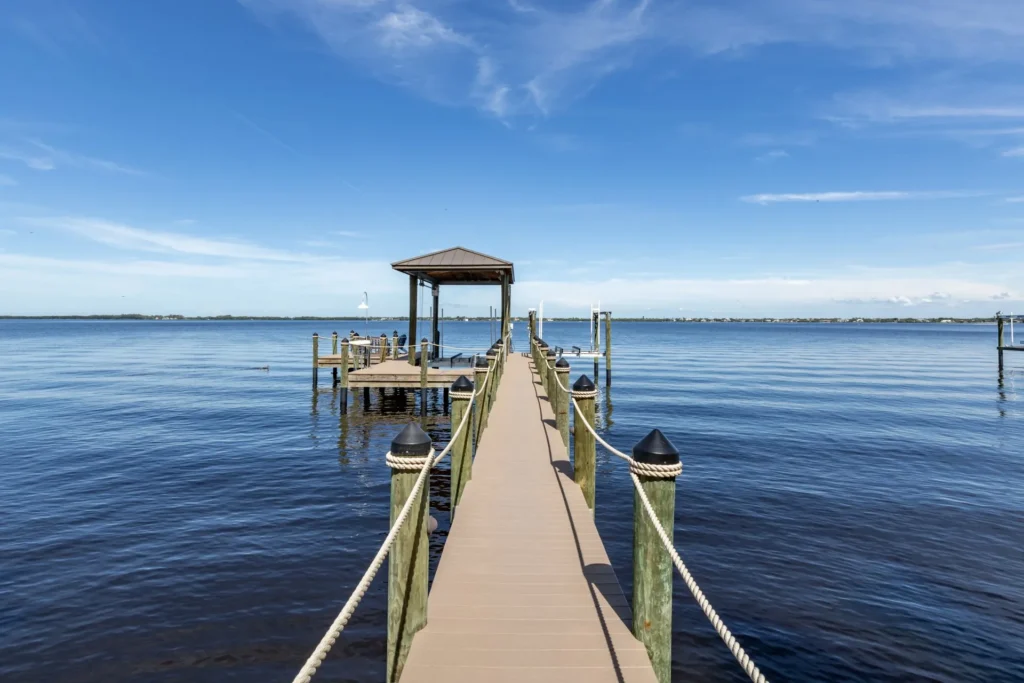
Long dock with rope railings extending over calm water to a covered seating area.
A serene dock with rope railings leads to a covered pavilion, perfect for enjoying tranquil waterfront views.

A covered dock not only shields your vessel from sun and weather but also adds architectural character to your shoreline. Meanwhile, integrated lighting improves nighttime visibility and safety. Therefore, when browsing examples, pay attention to how structural elements and accessories work together to create a cohesive design.

How to Use Dock Photos for Planning

Rather than simply browsing for ideas, use images strategically. First, identify layouts that match your shoreline conditions. Next, compare decking materials and railing options. Additionally, consider how lift placement affects access and maneuverability. By narrowing your preferences step by step, you can approach your consultation with a clearer understanding of your priorities.

Ultimately, reviewing inspiration galleries helps transform abstract ideas into actionable plans.

FAQ

Why should I review dock images before building?

Visual examples help clarify style preferences, compare materials, and evaluate features. As a result, you can make informed decisions before investing in construction.

Do photos accurately represent long-term durability?

While images highlight design and finish, discussing structural materials with a professional ensures you understand maintenance requirements and lifespan expectations.

Can HONC customize a dock based on inspiration photos?

Absolutely. We regularly adapt design elements from reference images while tailoring each project to local conditions and homeowner needs.

Ready to Bring Your Vision to Life?

After reviewing inspiring boat dock images, the next step is a professional consultation. At HONC, we combine visual inspiration with engineering expertise to deliver docks built for performance and longevity. Therefore, let’s transform your ideas into a shoreline structure designed specifically for you.

Best Boat Lift Brands for Commercial Marinas | HONC

For marina owners and waterfront developers, investing in the best boat lift is essential for protecting vessels, maximizing dock space, and improving operational efficiency. However, not all lift systems are built for the demands of commercial environments. High traffic, varying vessel sizes, and constant exposure to saltwater require engineered strength and dependable performance. Therefore, selecting the right manufacturer is just as important as choosing the right capacity.

At HONC, we help clients evaluate leading brands based on reliability, corrosion resistance, load capacity, and serviceability. Moreover, our team ensures each system is professionally installed to meet both safety standards and long-term performance goals.

What Sets Commercial Lift Systems Apart?

Unlike residential models, commercial-grade lifts must handle frequent daily cycles and a wider range of hull designs. As a result, they typically feature reinforced aluminum frames, stainless steel hardware, and high-torque motors. Additionally, advanced bunk configurations and remote-control automation improve both efficiency and user experience.

Commercial marina operators also benefit from modular designs. For example, adaptable cradle systems allow staff to accommodate different vessel types without replacing the entire structure. In contrast, lower-tier lifts may require costly modifications over time.

Leading Boat Lift Manufacturers for Marina Applications

  1. Golden Boat Lifts
    Known for robust aluminum construction and powerful drive systems, Golden Boat Lifts are engineered for heavy-use environments. Furthermore, their customization options make them ideal for marinas managing diverse fleets.
  2. IMM Quality Boat Lifts
    IMM offers precision craftsmanship and dependable performance. Consequently, many commercial operators rely on their cable-driven systems for long-term reliability.
  3. Neptune Boat Lifts
    With an emphasis on corrosion resistance and innovative design, Neptune provides solutions well-suited for saltwater applications. Meanwhile, their streamlined installation process minimizes operational downtime.

For additional industry insights, the National Marine Manufacturers Association provides valuable data on marina trends and safety standards at https://www.nmma.org.

How to Choose the Best Boat Lift for Your Marina

Selecting the right system begins with understanding your marina’s operational demands. First, evaluate maximum vessel weight and beam width. Next, consider tidal fluctuations, water depth, and environmental exposure. Because commercial docks experience higher usage, motor strength and gear durability should be prioritized over entry-level pricing.

Ultimately, selecting the best boat lift depends on balancing structural integrity with lifecycle cost. Although upfront pricing may vary, premium materials and expert installation significantly reduce maintenance expenses over time. Therefore, partnering with an experienced marine contractor ensures optimal return on investment.

Why Professional Installation Matters

Even the most advanced lift system can underperform if improperly installed. Consequently, proper piling alignment, electrical setup, and load calibration are critical. HONC’s marine construction specialists evaluate dock structure, water conditions, and vessel requirements before recommending a solution.

Moreover, our team coordinates permitting and compliance requirements to ensure each project meets Florida building codes. As a result, marina operators gain peace of mind knowing their investment is secure and fully optimized.

When evaluating brands, it is also important to assess service accessibility. Readily available replacement parts and responsive manufacturer support can significantly reduce downtime. Therefore, we guide clients toward systems with strong dealer networks and proven service records.

Commercial marinas require lift systems engineered for endurance, precision, and safety. The right manufacturer combined with expert installation makes all the difference.

HONC Marine Division

Long-Term Value and Operational Efficiency

While initial price often influences decision-making, long-term performance ultimately defines value. High-quality drive components, reinforced beams, and sealed electrical systems reduce unexpected repairs. Additionally, streamlined lifting speeds improve dock turnover, which directly impacts revenue for high-traffic facilities.

Our team helps you identify the best boat lift for your capacity needs, environmental conditions, and growth plans. Meanwhile, we prioritize systems that integrate seamlessly with existing dock infrastructure to minimize disruptions during installation.

Because commercial operations cannot afford extended downtime, durability and serviceability remain top priorities. Therefore, choosing a trusted brand backed by professional expertise ensures consistent, reliable performance year after year.

FAQ

What capacity should a commercial boat lift support?

Capacity depends on the heaviest vessel your marina services, including fuel and onboard equipment. Always allow a safety margin above maximum expected weight.

Are aluminum lifts better for saltwater marinas?

Yes. Marine-grade aluminum resists corrosion more effectively than untreated steel, especially in coastal environments.

How often should commercial lifts be serviced?

Routine inspections are recommended at least annually. However, high-traffic marinas may benefit from biannual maintenance checks.

Can existing docks support upgraded lift systems?

In many cases, yes. A structural assessment determines whether reinforcement or piling adjustments are required.

Pontoon Lift Canopy Systems for Commercial Marinas | HONC

A professionally engineered pontoon lift canopy does more than provide shade—it protects valuable marine assets while enhancing the appearance and functionality of your waterfront facility. At HONC, we design and install commercial-grade overhead systems specifically built to withstand demanding marine environments.

Moreover, our canopy structures are tailored for marinas, yacht clubs, waterfront resorts, and multi-slip developments that require durability without sacrificing aesthetics. Because commercial properties face higher usage and exposure, every component is selected with long-term performance in mind. As a result, operators benefit from reduced maintenance costs and extended lift lifespan.

Why Commercial-Grade Matters
Residential-rated coverings often fail under sustained coastal exposure. In contrast, HONC commercial systems are engineered for higher wind loads, UV resistance, and daily operational demands.

Built for Harsh Marine Environments

Waterfront conditions can be unforgiving. Therefore, every pontoon lift canopy system we construct features corrosion-resistant aluminum framing and high-performance marine fabric. Additionally, our designs account for coastal wind speeds and seasonal storm patterns common throughout Florida and the Gulf Coast.

We follow structural best practices aligned with guidance from organizations such as the American Society of Civil Engineers (ASCE), which establishes wind load standards for coastal construction (https://www.asce.org). Consequently, marina owners gain confidence knowing their investment meets recognized engineering benchmarks.

Meanwhile, UV-resistant materials reduce fading and fabric breakdown, helping maintain a professional appearance year after year. Ultimately, this combination of structural integrity and premium materials ensures dependable protection for high-value vessels.

Benefits of Installing a Lift Covering System

  • Shields pontoons from sun damage and oxidation
  • Minimizes upholstery fading and interior heat buildup
  • Reduces cleaning and detailing frequency
  • Protects lift components from premature wear
  • Enhances marina aesthetics and slip value
  • Supports long-term asset preservation

In addition to vessel protection, covered lifts often increase customer satisfaction. For example, boat owners appreciate reduced surface temperatures and cleaner decks upon arrival. As a result, marina operators can justify premium slip rates while delivering tangible value.

Custom Solutions for Commercial Properties

No two waterfront facilities operate the same way. Therefore, HONC offers tailored solutions that accommodate varying slip widths, lift capacities, and dock layouts. Whether your marina includes fixed docks, floating systems, or a combination of both, we design canopy structures that integrate seamlessly.

Additionally, we offer multiple fabric colors and frame finishes to complement your branding and architectural style. However, design flexibility never compromises structural performance. Each pontoon lift canopy installation is engineered for stability, even in open-water exposure zones.

Because commercial marinas require minimal downtime, our installation teams work efficiently and coordinate closely with property managers. Consequently, disruption to daily operations is kept to a minimum.

Structural Engineering & Wind Considerations

Wind uplift is one of the most critical design factors for any overhead marine structure. In contrast to light-duty covers, commercial systems must resist sustained pressure as well as sudden gusts. Therefore, HONC evaluates site-specific exposure categories, fetch distances, and anchoring conditions before fabrication begins.

Moreover, we reinforce mounting hardware and frame connections to ensure long-term reliability. By focusing on load distribution and anchoring integrity, we reduce stress on both the lift and dock infrastructure. As a result, your canopy structure performs consistently even during challenging weather cycles.

Heavy-Duty Aluminum Frame

Marine-grade aluminum resists corrosion while maintaining structural strength.

UV-Resistant Marine Fabric

High-performance fabric reduces sun degradation and fading.

Engineered Mounting Systems

Secure attachments designed for commercial dock configurations.

Custom Sizing Options

Accommodates wide-beam pontoons and high-capacity lift systems.

FAQ

How long does a commercial pontoon lift canopy last?

With proper maintenance, commercial-grade systems can provide many years of reliable performance. Fabric lifespan varies by exposure, however structural frames are designed for long-term durability.

Can these systems withstand coastal storms?

While no structure is indestructible, HONC engineers each installation to meet local wind load requirements and marine exposure standards.

Do covered lifts require additional permits?

In many municipalities, yes. Therefore, we assist clients in navigating permitting requirements to streamline the approval process.

Protecting your marina’s assets starts above the boat. A professionally engineered canopy system safeguards both vessels and infrastructure.

Upgrade Your Marina with Commercial-Grade Protection

If you operate a high-traffic marina or waterfront development, investing in a pontoon lift canopy is a proactive step toward asset preservation and customer satisfaction. Moreover, partnering with HONC ensures expert design, quality craftsmanship, and dependable installation from start to finish.

Commercial waterfront operations demand solutions built for longevity and performance. Therefore, choosing a professionally engineered overhead system is not simply an upgrade—it is a strategic investment. From structural design to final installation, HONC delivers dependable canopy solutions that protect vessels, extend lift life, and elevate the overall marina experience.

Pontoon Boat Lifts for Commercial Marinas & Waterfront Properties

Why Commercial Properties Choose Pontoon Boat Lifts

Commercial waterfront facilities require equipment that performs consistently under frequent use. Unlike residential setups, marinas and rental operations demand reinforced construction and simplified operation. Therefore, selecting the right lift system directly impacts safety, efficiency, and long-term cost savings.

Boat lifts for pontoon boats are specifically engineered to support wider beams and evenly distribute weight across dual or triple pontoons. Additionally, elevating vessels above the waterline reduces algae buildup, prevents blistering, and minimizes mechanical wear. According to the National Marine Manufacturers Association (NMMA), proper storage significantly extends vessel lifespan and reduces maintenance costs.

Ultimately, a professionally installed lift not only protects your fleet but also enhances the overall appearance and value of your waterfront property.

Heavy-Duty Aluminum Construction

Our corrosion-resistant aluminum frames provide long-term durability in both freshwater and saltwater environments. Consequently, maintenance demands remain low while structural integrity remains high.

Custom Weight Capacities

From smaller recreational pontoons to large commercial party barges, we design systems tailored to your vessel specifications.

Advanced Cable & Pulley Systems

Additionally, our precision-balanced mechanisms ensure smooth, even lifting that protects pontoons from uneven stress.

Electric & Remote Operation Options

For busy commercial properties, streamlined operation saves time. Therefore, optional remote-control systems improve workflow and staff efficiency.

Complete Commercial Lift Solutions

  • Site Evaluation & Water Depth Assessment
  • Custom Fabrication & Engineering
  • Professional Installation
  • Lift Repairs & Upgrades
  • Preventative Maintenance Programs

Meanwhile, our experienced team coordinates every stage of the process to minimize downtime and disruption to your business operations.

FAQ

How much weight can a commercial pontoon lift handle?

Weight capacities vary depending on vessel size and configuration. However, HONC systems are custom-designed to safely support a wide range of commercial pontoon boats.

Are these lifts suitable for saltwater environments?

Yes. In fact, our marine-grade aluminum construction is specifically designed to resist corrosion in coastal conditions.

How long does installation take?

Project timelines depend on site conditions and lift specifications. Generally, commercial installations are completed efficiently to reduce operational interruptions.

Do lifts reduce long-term maintenance costs?

Absolutely. Because vessels are stored above water, owners typically see reduced hull cleaning, fewer repairs, and extended engine life.

Protect Your Commercial Fleet with Confidence

Investing in professionally engineered lifting systems ensures safety, longevity, and operational efficiency. Therefore, partnering with HONC means choosing a team committed to craftsmanship and customer satisfaction.