Choosing the right decking material is essential for long-term marine performance, and composite boat flooring has become a leading solution for commercial applications. At HONC, we help marinas, waterfront businesses, and marine contractors select materials that balance durability with cost efficiency. Moreover, composite options provide excellent resistance to moisture, UV exposure, and heavy foot traffic. As a result, they are ideal for high-use environments where reliability matters most.
Understanding Composite Marine Materials
Composite decking is made from a blend of recycled wood fibers and plastics, creating a strong, weather-resistant surface. Unlike traditional wood, it does not splinter, warp, or rot over time. Additionally, it requires significantly less maintenance, which reduces operational costs. Therefore, many commercial operators are transitioning to these modern materials for long-term value.
Why Choose Composite Materials
- High resistance to moisture and corrosion in marine environments
- Reduced maintenance compared to traditional wood
- Long lifespan with consistent structural integrity
- Slip-resistant surfaces for improved safety
- Environmentally friendly material options
Moreover, these advantages make composite solutions a smart investment for commercial waterfront properties.
Key Differences to Consider
Wood offers a classic appearance; however, it requires frequent sealing and repairs.
Composite materials provide consistent performance with minimal upkeep. Consequently, they reduce long-term maintenance costs.
Although initial costs may be higher, composite decking often delivers better lifecycle value. Ultimately, this makes it a preferred choice for commercial use.
Where Composite Decking Excels
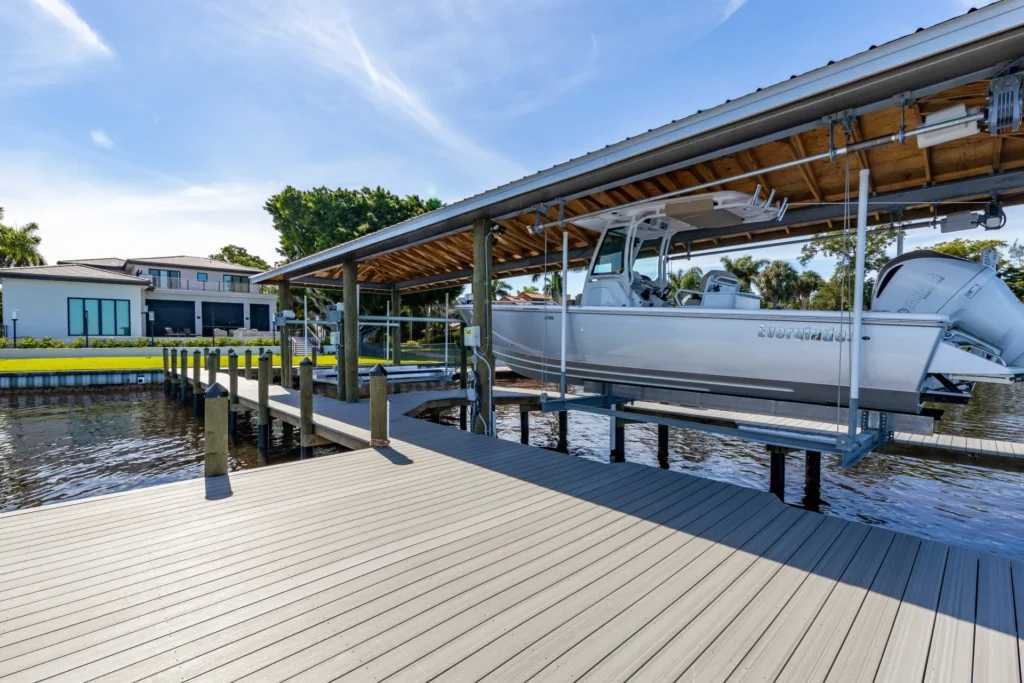
Composite surfaces are widely used in marinas, docks, boardwalks, and waterfront facilities. For example, high-traffic docks benefit from the material’s durability and slip resistance. Meanwhile, resorts and rental operations appreciate its low maintenance requirements. In contrast, traditional materials may struggle to keep up with constant use.
Balancing Upfront and Long-Term Costs
While composite materials may have a higher initial price point, they often result in lower maintenance expenses over time. Additionally, their durability reduces the need for frequent repairs or replacements. As a result, many commercial operators find that the total cost of ownership is lower compared to wood alternatives.
For more information on sustainable and durable marine materials, review the U.S. Environmental Protection Agency Sustainable Materials Management. These resources highlight environmentally responsible construction practices.
Trusted Marine Construction Expertise
HONC provides expert guidance on selecting and installing composite decking systems. Therefore, clients receive solutions tailored to their specific operational needs. Additionally, our team ensures proper installation techniques that maximize performance and longevity. Ultimately, this results in a reliable, high-quality finish that stands up to commercial demands.
FAQ
Is composite decking suitable for saltwater environments?
Yes, it is designed to resist moisture, corrosion, and UV exposure in marine conditions.
How long does composite decking last?
With proper installation, it can last decades with minimal maintenance.
Is it more expensive than wood?
Upfront costs are higher; however, long-term savings often offset the difference.
Composite boat flooring offers a modern solution for commercial marine environments. Moreover, its durability, safety features, and low maintenance requirements make it a practical investment. With HONC’s expertise, you can ensure your decking system is built to perform for years to come. As a result, your waterfront property remains efficient, safe, and visually appealing.